


If you’ve ever faced a tough coding problem, you know how frustrating it can be to stare at the screen without knowing where to start. That’s why understanding coding problem solutions is so essential—not just for interviews, but for becoming a confident and effective programmer.
In this article, we’ll take you through a detailed, step-by-step approach to solving coding problems, common types of challenges you’ll encounter, and resources that make learning faster and smarter. Think of this as your ultimate guide to cracking coding challenges.
Why Coding Problem Solutions Are Crucial
You might wonder, “Why not just write code and hope it works?” The truth is, solving coding problems isn’t just about getting a working solution—it’s about developing problem-solving skills and learning efficient approaches. Studying coding problem solutions can help you:
- Build logical thinking skills: Learn how to break complex problems into smaller, manageable steps.
- Understand algorithms deeply: Study common patterns like recursion, dynamic programming, and greedy algorithms.
- Optimize your code: Learn techniques to reduce runtime and memory usage.
- Prepare for interviews: Many companies test problem-solving abilities rather than just syntax knowledge.
- Gain confidence: Knowing systematic ways to approach problems makes you less anxious and more capable.
Remember, reviewing solutions isn’t cheating—it’s learning. The more you understand different approaches, the better you become at solving new problems independently.
Common Categories of Coding Problems
Before diving into solutions, it’s helpful to know the types of problems you might face. Categorizing problems helps you pick the right strategy quickly.
1. Array and String Problems
These are among the most common coding problems. They involve manipulating lists or sequences of characters. Typical challenges include:
- Finding duplicates in an array
- Reversing strings or arrays
- Checking if a string is a palindrome
- Rotating arrays
Example: Given an array [1, 2, 3, 4, 5], reverse it to [5, 4, 3, 2, 1].
2. Dynamic Programming (DP) Problems
DP problems involve optimizing solutions step by step and storing results to avoid recalculation. They can be challenging but are highly valuable to master. Examples include:
- Fibonacci sequence
- Knapsack problem
- Coin change problem
Example: Find the minimum number of coins to make a certain amount using dynamic programming.
3. Graph and Tree Problems
These problems focus on hierarchical or connected data structures. Common tasks include:
- Tree traversals (in-order, pre-order, post-order)
- Graph traversals (DFS, BFS)
- Finding shortest paths (Dijkstra, Bellman-Ford)
- Detecting cycles in graphs
Example: Find the shortest path between two nodes in a weighted graph.
4. Sorting and Searching Problems
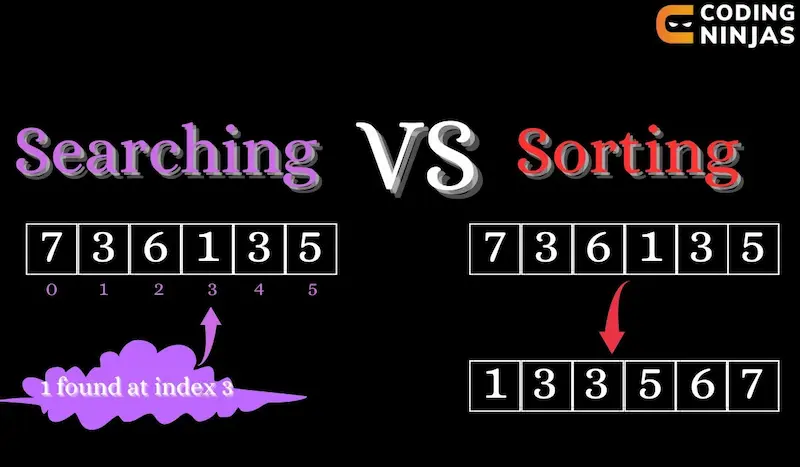
Sorting and searching are foundational skills in programming. Problems include:
- Binary search
- Quick sort / merge sort implementations
- Searching for an element in a sorted array efficiently
Example: Implement binary search to find if 7 exists in [1, 3, 5, 7, 9].
5. Mathematical and Logical Puzzles
These problems test reasoning skills rather than just coding ability. Examples include:
- Prime number detection
- Factorials and combinations
- Logical puzzles
Example: Determine if a number is prime using an efficient algorithm.
Step-by-Step Approach to Solving Coding Problems
To truly master coding problem solutions, follow this systematic approach:
Step 1: Understand the Problem
- Carefully read the problem statement.
- Identify inputs, outputs, and constraints.
- Clarify ambiguities before coding.
Tip: Rewrite the problem in your own words—it helps in understanding it better.
Step 2: Plan Your Approach
- Think about which data structures or algorithms fit best.
- Consider edge cases and constraints.
- Break the problem into smaller, logical steps.
Tip: Draw diagrams for complex problems, especially trees or graphs.
Step 3: Write Pseudocode
- Draft a rough version of your solution in simple words or steps.
- Focus on logic rather than syntax.
Example Pseudocode for Array Reversal:
Initialize start = 0, end = length-1
While start < end:
Swap array[start] and array[end]
Increment start
Decrement end
Step 4: Implement the Solution
- Translate pseudocode into your preferred programming language.
- Ensure the first implementation works correctly, even if it’s not optimized.
Step 5: Test Thoroughly
- Test with sample inputs, edge cases, and large datasets.
- Check for off-by-one errors, empty inputs, or maximum constraints.
Tip: Writing small test cases often reveals hidden issues.
Step 6: Optimize and Refactor
- Look for ways to improve runtime or memory usage.
- Simplify your code without sacrificing readability.
- Compare with known patterns to see if your approach can be improved.
Example: If a naive solution has O(n^2) complexity, check if sorting or a hash map can reduce it to O(n log n) or O(n).
You may also like to read this:
Code Editor Reviews: Boost Your Coding Efficiency Today
Web Development Software Guide | Tools For Developers
Top Programming Apps To Learn Coding Anywhere
Tech Solutions For Developers To Boost Productivity
Top Software Solutions For Coding Every Developer Should Use
Resources to Study Coding Problem Solutions
Having access to good resources accelerates your learning. Here are some of the best:
- LeetCode: Thousands of problems with multiple solutions and explanations.
- HackerRank: Algorithm challenges with instant feedback.
- GeeksforGeeks: Step-by-step tutorials and code examples.
- Books: “Cracking the Coding Interview” is highly recommended.
- YouTube Tutorials: Many experienced programmers explain solutions clearly.
- Coding communities: Reddit, StackOverflow, and Discord channels can provide insights and alternative solutions.
Pro Tip: Always try the problem first on your own, then review solutions to understand different approaches.
Tips for Mastering Coding Problem Solutions
- Practice Regularly: Consistent practice builds confidence and speed.
- Focus on Patterns: Many problems repeat logical patterns—recognizing them saves time.
- Pair Programming: Discussing problems with others exposes you to new techniques.
- Analyze Mistakes: Review incorrect attempts to understand where you went wrong.
- Track Progress: Keep a log of solved problems, approaches, and learning points.
Conclusion
Mastering coding problem solutions is a journey, not a one-time effort. By understanding problem types, following a systematic approach, using resources wisely, and practicing consistently, you can tackle even the most challenging coding problems with confidence.
Remember, the goal is not just to write working code—it’s to think like a problem solver, optimize your solutions, and grow as a programmer. Start small, stay persistent, and soon solving coding problems will feel like second nature.
FAQs About Coding Problem Solutions
1. What are coding problem solutions?
Coding problem solutions are structured ways to solve programming challenges. They not only provide the correct output but also explain the logic, steps, and algorithms used to arrive at the solution. Reviewing these solutions helps you understand patterns and improve problem-solving skills.
2. Why should I study coding problem solutions?
Studying solutions helps you:
Learn efficient algorithms and data structures
Understand different approaches to the same problem
Prepare for coding interviews
Avoid repeating mistakes and improve logic
3. Can I just copy coding problem solutions?
No, copying solutions without understanding won’t help you grow as a programmer. Always try to solve a problem first, then compare your approach with existing solutions to learn better strategies and optimization techniques.
4. How can I improve at solving coding problems?
To improve:
Practice consistently
Focus on understanding problem patterns
Test your code with edge cases
Review and analyze both your solutions and others’ solutions
5. What are the best resources for coding problem solutions?
Some recommended resources include:
LeetCode – Offers practice problems with multiple solutions
HackerRank – Provides challenges with instant feedback
GeeksforGeeks – Step-by-step tutorials and examples
Books – “Cracking the Coding Interview” is highly recommended
YouTube – Tutorials from experienced programmers